


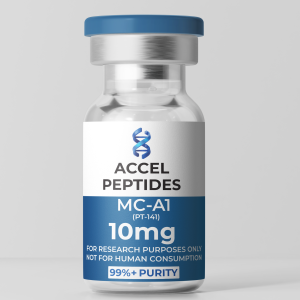
Support increased desire, enhanced satisfaction, and a revitalized intimate life with Accel Peptides.
Sexual Health Peptides
Key Peptides for Vitality Research
MC-A1 (PT-141 / Bremelanotide)MC-A1 is a synthetic peptide recognized for its unique mechanism in enhancing libido and physiological arousal. Unlike traditional compounds that target the vascular system, PT-141 functions as a melanocortin receptor agonist. By stimulating dopamine release in the brain, it regulates sexual desire and arousal pathways at the neurological level.
Research Benefits & Applications
- Neurological Modulation: Investigation into dopamine receptor pathways to regulate sexual desire.
- Arousal Studies: Researching the treatment of low libido and arousal dysfunction in both male and female subjects.
- Systemic Wellness: Exploring the peptide’s role in overall vitality and hormone-independent physiological responses.
Compound Technical Overview
| Compound | Mechanism of Action | Primary Research Goal |
|---|---|---|
| MC-A1 (PT-141) | Melanocortin Receptor Agonist | Libido & Dopaminergic Arousal |
Safety Profiles & Protocols
Researchers should monitor for potential side effects including temporary nausea, headaches, or injection site reactions. Cardiovascular monitoring is recommended in specific research designs to assess the impact on blood pressure and heart rate.
Research FAQ's
01 What is MC-A1 (PT-141) and its primary use in research?
MC-A1 (PT-141 or Bremelanotide) is a synthetic peptide used in research to study sexual dysfunction and low libido. Unlike vascular-targeted compounds, it acts directly on the central nervous system as a melanocortin receptor agonist to stimulate sexual desire.
02 How does the mechanism of action differ from other treatments?
MC-A1 does not act on the cardiovascular system. Instead, it crosses the blood-brain barrier to activate melanocortin receptors, which triggers the release of dopamine—a key neurotransmitter involved in the neurological pathways of arousal and sexual motivation.
03 What are the observed research benefits for both genders?
Research indicates that MC-A1 effectively regulates sexual desire and physiological arousal in both men and women. It is particularly valued in studies focusing on hypoactive sexual desire disorder (HSDD) and treatment-resistant erectile dysfunction.
04 What safety considerations should researchers monitor?
Commonly observed effects in laboratory settings include transient nausea, flushing, and headaches. Researchers should also conduct cardiovascular monitoring, as the peptide can influence blood pressure and heart rate in specific subjects.
05 What is the typical timeline for seeing results?
In a controlled research environment, acute effects on arousal can often be observed within 2 to 4 hours following administration. However, long-term studies on libido enhancement typically require consistent observation over several weeks of a protocol.